
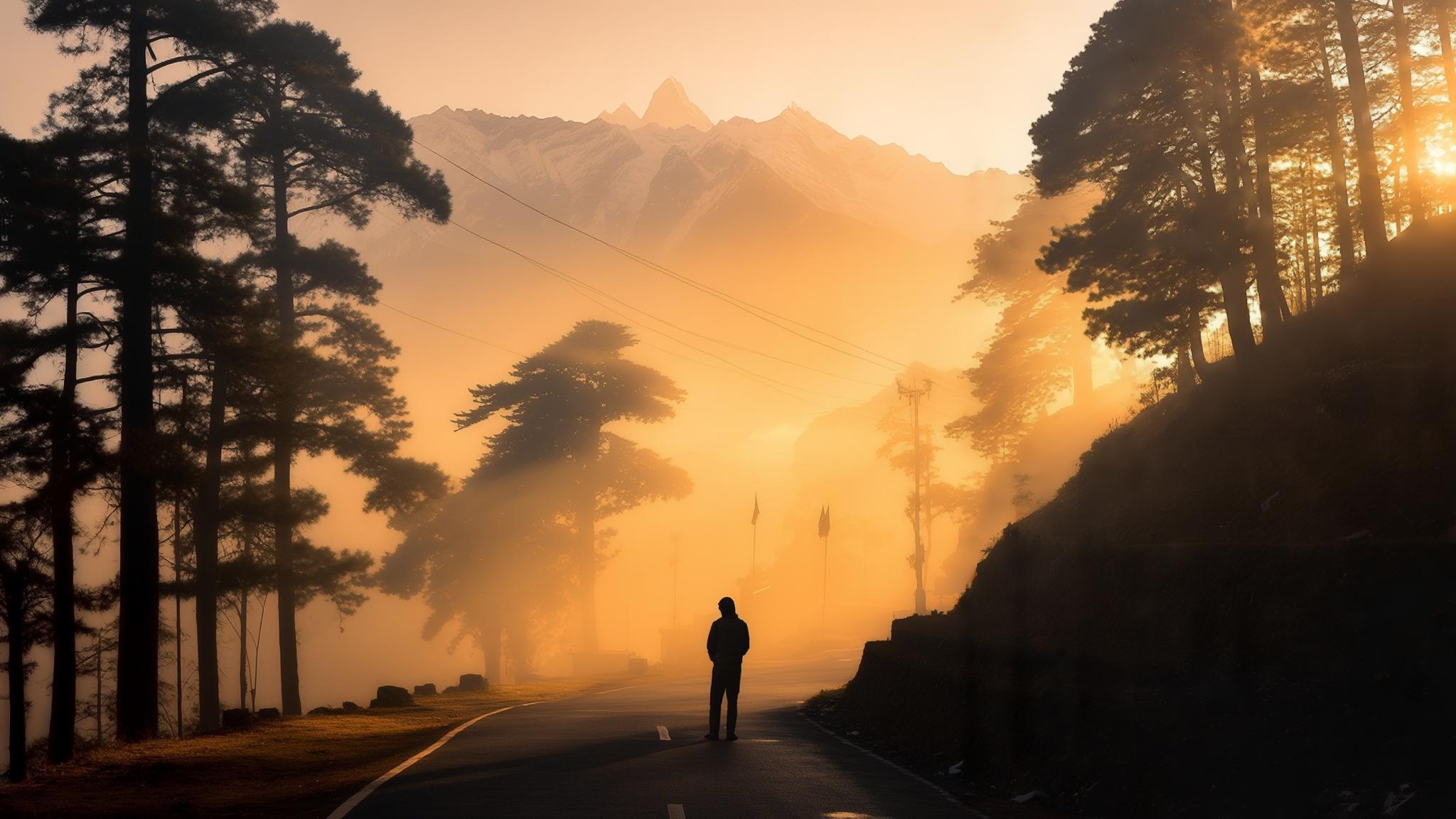
Approximately 35 lakh tourists visit Mussoorie each year, according to Uttarakhand Tourism estimates — and somewhere around 80 percent of them spend the majority of their trip on a single 2-kilometre stretch called Mall Road. That number tells you two things simultaneously: Mussoorie is genuinely magnetic, and most people are experiencing only a sliver of it. The hill station sits at 2,005 metres above sea level in the Garhwal Himalayas, roughly 290 kilometres from Delhi, and it has been pulling visitors since the British established it as a summer retreat in 1823. What has changed is everything around it — the crowds, the prices, the infrastructure — and what has not changed is the landscape itself, which remains one of the most rewarding in the lower Himalayas.
The Numbers Behind Mussoorie’s Tourism Economy
Understanding the data first helps you plan smarter. Mussoorie’s tourism is intensely seasonal: roughly 60 percent of annual visitors arrive between April and July, according to figures cited by Uttarakhand Tourism. That compression creates the gridlock on the Dehradun–Mussoorie road that has become almost as famous as the destination itself — on peak summer weekends, the 36-kilometre climb from Dehradun can take upward of three hours by car.
Hotel inventory has grown to meet demand, but not evenly. The Mussoorie-Landour area now has several hundred registered properties, ranging from ₹800 dormitory beds to luxury suites crossing ₹25,000 per night. The mid-range sweet spot — a clean, centrally located double room with mountain views — runs ₹2,500 to ₹5,000 per night in shoulder season and climbs to ₹6,000–₹12,000 during peak May holidays.
Spending patterns are also shifting. A 2024 survey by travel platform MakeMyTrip noted that hill station travelers are increasingly booking 3–4 night stays rather than weekend breaks, and Mussoorie ranked among the top five domestic hill destinations for average booking value. The average couple now spends roughly ₹12,000–₹18,000 for a three-night trip including accommodation, meals, and local transport — though that number can drop to ₹7,000 with budget accommodation and home-cooked meals at local dhabas.
What the Tourist Trail Misses — and Why It Matters
The standard Mussoorie itinerary runs predictably: Mall Road stroll, Kempty Falls, Gun Hill via ropeway, Lal Tibba viewpoint, Camel’s Back Road. These are legitimately good experiences, but they are also the same experiences shared by roughly 34 lakh of those annual visitors. The hill station has significant depth beyond this circuit, and reaching it requires almost no extra effort.
Landour, the cantonment area sitting roughly 300 metres above Mall Road, is the single most rewarding detour available. It is quieter by an order of magnitude, has colonial-era stone buildings in various states of graceful decay, and houses Char Dukan — a cluster of four small shops near Lal Tibba where locals and long-term residents gather for breakfast. The Landour bakehouse sells fresh-baked bread that has been a constant here for decades. The entire area is pedestrian-friendly, free of the touts and trinket sellers that line Mall Road, and offers unobstructed Himalayan views on clear mornings.
Beyond Landour, the trails around Benog Wildlife Sanctuary — roughly 11 kilometres from Mall Road — offer forest walks through oak and rhododendron with credible bird-watching, including sightings of the cheer pheasant. The sanctuary is open to day visitors with a nominal entry fee and sees a fraction of the footfall of the main tourist belt. Similarly, Cloud’s End at the western tip of Mussoorie sits where the British-era road ends and the forest begins; there is a heritage hotel here and a trailhead that leads into the Aglar river valley.
Season by Season: When Mussoorie Actually Delivers
Choosing the right window changes the trip entirely. Each season has a genuine case for it, but they serve different types of travelers.
September through November is consistently underrated. The monsoon has cleared, the air carries exceptional visibility — on crisp October mornings, the Gangotri and Kedarnath ranges are visible from Lal Tibba — and hotel rates drop 20–35 percent from summer peaks. Trails are open and dry. The crowds thin dramatically after the school holidays end in early July, and this shoulder window through October is, by most measures, the best balance of experience and value the hill station offers.
Winter brings a different character. Snowfall is not guaranteed — Mussoorie’s lower elevation means snow events are irregular, occurring roughly five to eight times per season — but when it arrives, the transformation is complete. January and February are coldest, regularly dropping below 2°C at night. Bring real cold-weather gear, verify road conditions before driving up, and book accommodation with in-room heating confirmed.
Getting There, Getting Around, and What It Actually Costs
The nearest airport is Jolly Grant in Dehradun, approximately 60 kilometres from Mussoorie, with daily IndiGo and Air India flights from Delhi (roughly ₹2,500–₹5,500 one way). The more economical and often equally fast route is by train: the Shatabdi Express from Delhi to Dehradun takes approximately 5.5 hours and costs ₹725–₹1,500 in chair car to AC chair depending on the train. From Dehradun railway station or ISBT, shared taxis to Mussoorie run at ₹80–₹120 per seat; a private cab costs ₹700–₹900.
Within Mussoorie, private vehicles are restricted on Mall Road during peak hours, which makes walking the primary mode of transport for the main stretch — and it works well given the compact geography. For Landour, Benog, and Cloud’s End, local taxis charge ₹500–₹1,200 per trip depending on distance. Renting a bicycle (available at a few shops near Library Chowk at ₹100–₹150 per hour) is a genuinely pleasant option for the flatter sections of the tourist belt.
Where the Trip Goes Next in 2026
Mussoorie’s infrastructure is under active development. The Uttarakhand government has proposed a ropeway project connecting Dehradun directly to Mussoorie — a project discussed for years that would cut access time significantly and reduce road congestion. The state is also investing in better signage and trail maintenance around the Landour circuit and Benog trails, acknowledging that the hill station’s appeal depends on more than Mall Road commerce.
Overtourism pressure is real and increasingly acknowledged. The Mussoorie-Dehradun Development Authority has been working on carrying capacity frameworks, and there are periodic discussions about tourist entry caps during peak days — similar to measures trialled at Shimla. Whether those materialize in 2026 or later is uncertain, but the direction of policy is clearly toward managed tourism rather than uncapped growth.
For travelers, the implication is straightforward: Mussoorie is becoming more structured, not less. Booking accommodation three to four weeks ahead for peak season is no longer optional — it is necessary. Weekday visits are meaningfully better than weekend arrivals from a logistics standpoint. And the parts of the hill station that still feel unhurried — Landour, Benog, the pre-dawn walk along Camel’s Back Road — will remain that way only as long as most visitors stick to the crowded main strip.
Mussoorie does not need a defense or an apology. Its pull is legitimate — the colonial architecture, the Himalayan backdrop, the temperature break from the plains, the accessible altitude. What it needs from a traveler is a slight recalibration of expectations and itinerary. Show up mid-week in October, stay in Landour rather than Library Chowk, eat at the Tibetan restaurants on the Camel’s Back road, and walk the Benog trail in the morning before the day-trippers arrive. That is the trip that earns the return visit.
Frequently Asked Questions
{“@context”:”https://schema.org”,”@type”:”FAQPage”,”mainEntity”:[{“@type”:”Question”,”name”:”What is the best time to visit Mussoorie in 2026?”,”acceptedAnswer”:{“@type”:”Answer”,”text”:”September to November offers the best balance of clear weather, Himalayan views, and lower hotel rates — roughly 20–35% cheaper than peak summer. February is best for snow seekers, though snowfall is not guaranteed at Mussoorie’s 2,005-metre elevation.”}},{“@type”:”Question”,”name”:”How much does a 3-night Mussoorie trip cost for a couple?”,”acceptedAnswer”:{“@type”:”Answer”,”text”:”Budget travelers spending on train travel, budget accommodation, and dhaba meals can manage a 3-night trip for ₹7,000–₹10,000 per couple. A mid-range trip with comfortable hotels and café meals typically runs ₹15,000–₹22,000 per couple including transport from Delhi.”}},{“@type”:”Question”,”name”:”How do I get from Delhi to Mussoorie without a car?”,”acceptedAnswer”:{“@type”:”Answer”,”text”:”The Shatabdi Express from Delhi to Dehradun costs approximately ₹725–₹1,500 and takes 5.5 hours. From Dehradun, shared taxis to Mussoorie cost ₹80–₹120 per seat. The nearest airport, Jolly Grant, is about 60 km from Mussoorie.”}},{“@type”:”Question”,”name”:”Is Landour worth visiting separately from Mall Road?”,”acceptedAnswer”:{“@type”:”Answer”,”text”:”Landour sits roughly 300 metres above Mall Road, is significantly quieter, and features Char Dukan near Lal Tibba, the Landour Bakehouse, and colonial-era stone buildings. There is no entry fee and most visitors reach it via a 20-minute taxi from Mall Road.”}},{“@type”:”Question”,”name”:”Are there traffic restrictions on the Mussoorie road in peak season?”,”acceptedAnswer”:{“@type”:”Answer”,”text”:”During peak summer weekends in May and June, the Dehradun–Mussoorie road can see 2–4 hour traffic halts. The Uttarakhand government periodically enforces odd-even vehicle restrictions. Departing Dehradun before 7 AM or traveling mid-week avoids most congestion.”}}]}